What is Cupping and How Does it Relieve Pain?
Cupping therapy has been practiced for thousands of years across many cultures, including those of China, Egypt, and parts of Africa. Some of the earliest pictographic records suggest that ancient Egyptians were using cupping as early as 1500 B.C.
In China, one of the earliest written references to cupping appears in A Handbook of Prescriptions for Emergencies (241–381 A.D.) by the herbalist and alchemist Ge Hong. Over time, cupping became an important component of Traditional Chinese Medicine, where it has been used to support circulation, relieve pain, and promote the body's natural healing processes.
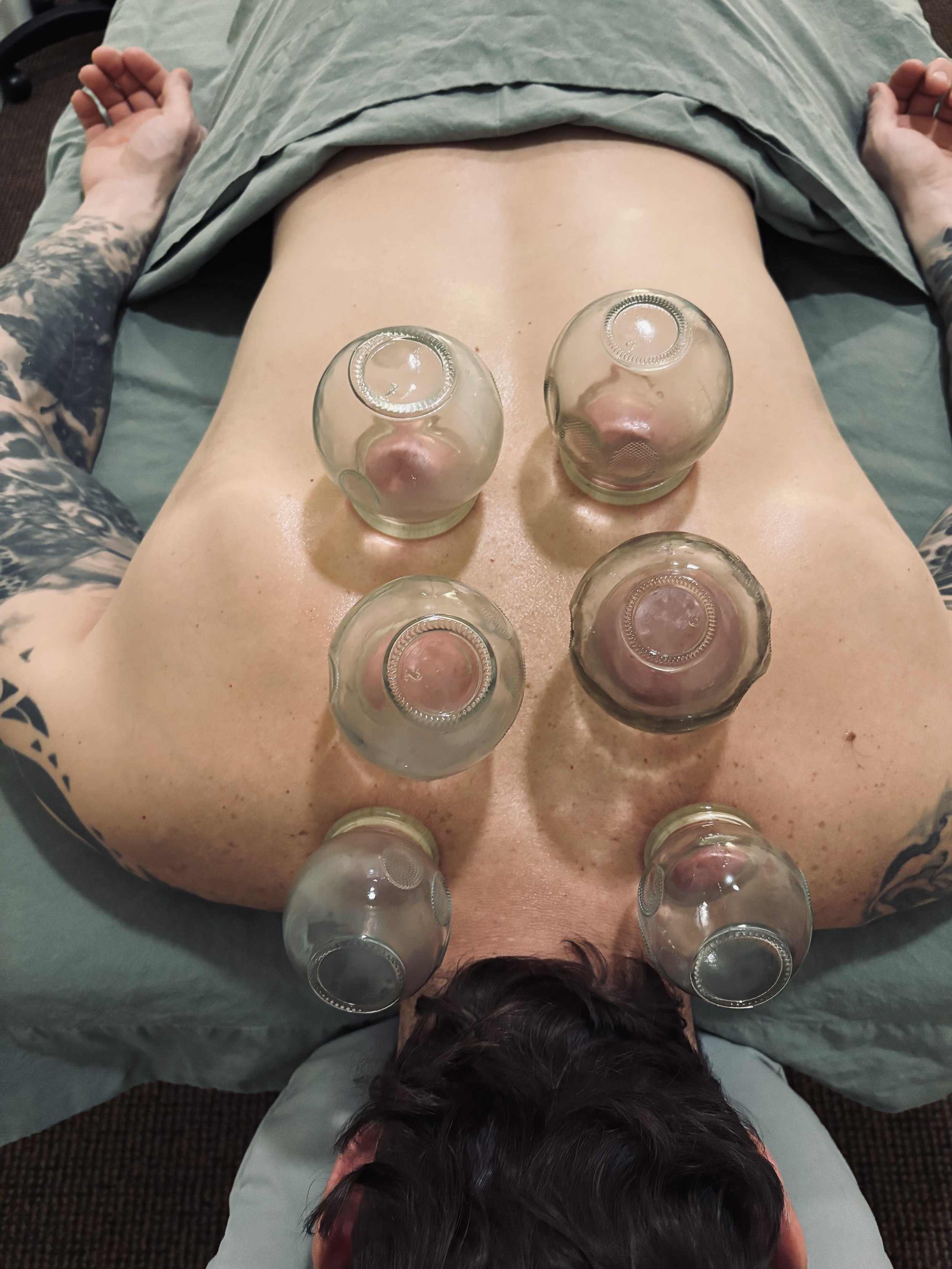
Cupping is a therapeutic technique that uses specially designed cups to create gentle suction on the skin. This suction can be produced using a mechanical pump, silicone cups, or heat (commonly referred to as fire cupping). The negative pressure gently lifts the skin and underlying connective tissue, creating space within the muscles and fascia.
This decompression increases local blood flow, encourages movement of tissues, and reduces muscle tension. The increased circulation also support the body’s healing response by delivering oxygen and nutrients to the treated area. While many people seek cupping to help with muscle tightness, soreness, and recovery, it can also be used for immune system support, asthma, and phlegm congested in the lungs.
In my clinical practice, I use cupping regularly for back, neck and shoulder pain, calf cramping, tendonitis and much more.
Cupping often leaves marks on the skin which look similar to a bruise but without any pain. As a Chinese medicine practitioner, these marks help me understand the state of your tissues and what underlying pathology may be present within the framework of Chinese medicine.
For example, dark purple or red marks indicate pain and stagnation of blood. Whereas yellow or puffy marks indicate a damp condition. Lots of redness means heat, and lack of color or blue indicates cold.
These marks always fade within a few days to a week and are one of the best conversation starters. Why yes, I was recently attacked by an octopus!
Cupping is a widely used and safe modality that I find beneficial to many patients. If you’re curious about if cupping would be good for you, please don’t hesitate to reach out.